The Confucian Genealogy of Chinese AI
How does two and a half thousand years of relational philosophy arrive at a language model? Not as a metaphor. Concretely, traceably, with names and dates and institutional lineages.
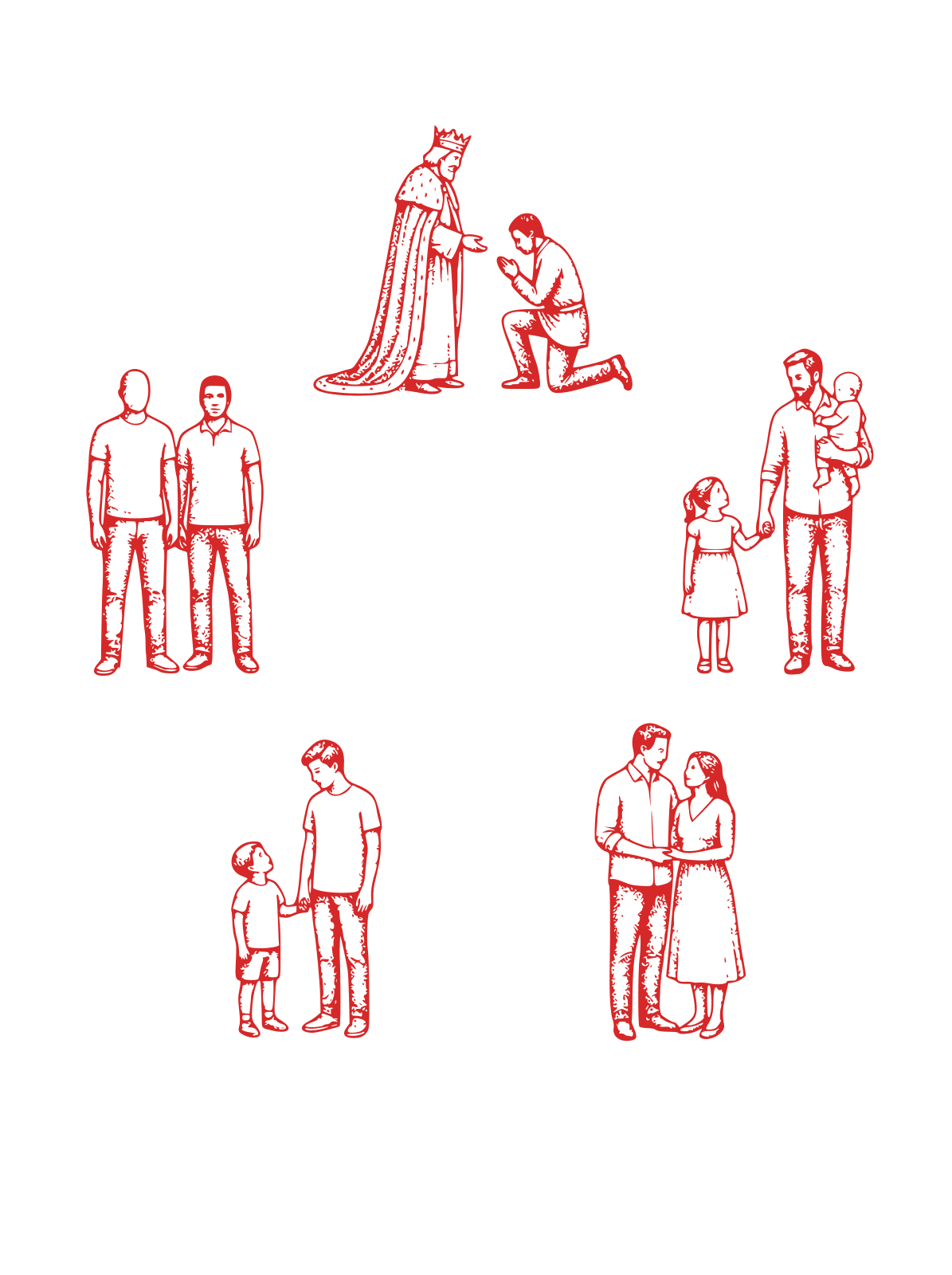
Begin with the source spring. Confucius, writing in the fifth century before the common era in a China shattered by the wars of the Spring and Autumn period, asked what would hold a civilization together when the rituals had broken and the kings had lost legitimacy and the philosophical schools were proliferating in mutual disagreement. His answer was not theological. It was relational. Civilization is held together by the cultivation of right relationship — between ruler and minister, parent and child, husband and wife, elder and younger sibling, friend and friend. The five Confucian relationships are not optional add-ons to a pre-existing self. They are the structure through which selfhood is formed. A person is not first an autonomous individual who subsequently negotiates with other autonomous individuals for the terms of their interaction. A person is constituted, from the beginning, through the relationships that make them intelligible.
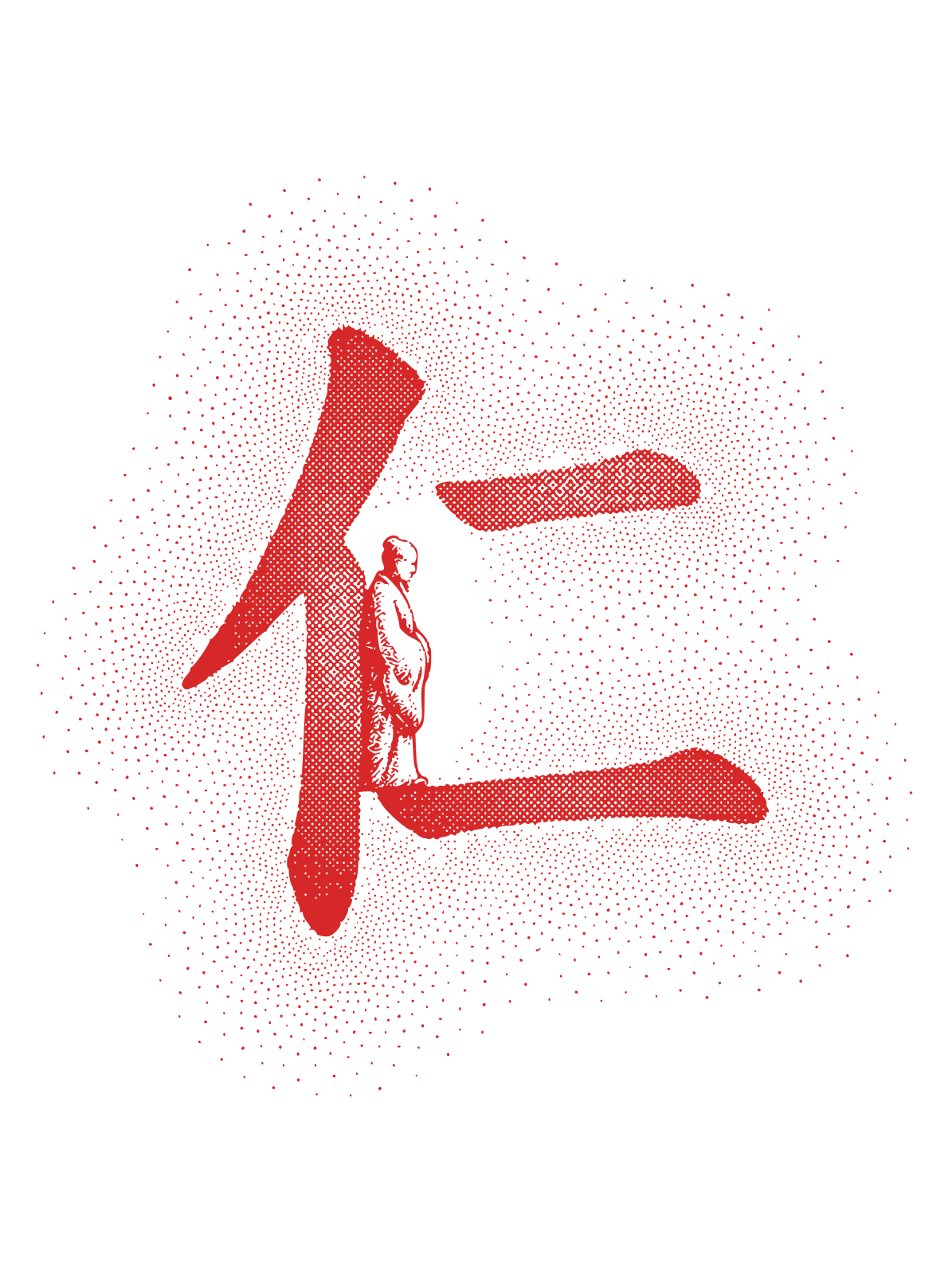
The root virtue in this scheme is ren. The graph for the character contains the radicals for "person" and "two" — ren is what happens between two persons, the capacity to feel another's suffering as one's own, the moral perception that makes ethical action a response rather than a calculation. Mencius, writing two centuries later, located ren in the immediate alarm any human being feels when seeing a child about to fall into a well. The alarm is not learned. It is native. The work of moral cultivation is to nurture and extend what is already there, by sustained practice, ritual observance, and the company of those further along the path.
This is the source spring. What follows is a long downhill flow with many tributaries, but the water never quite changes character.
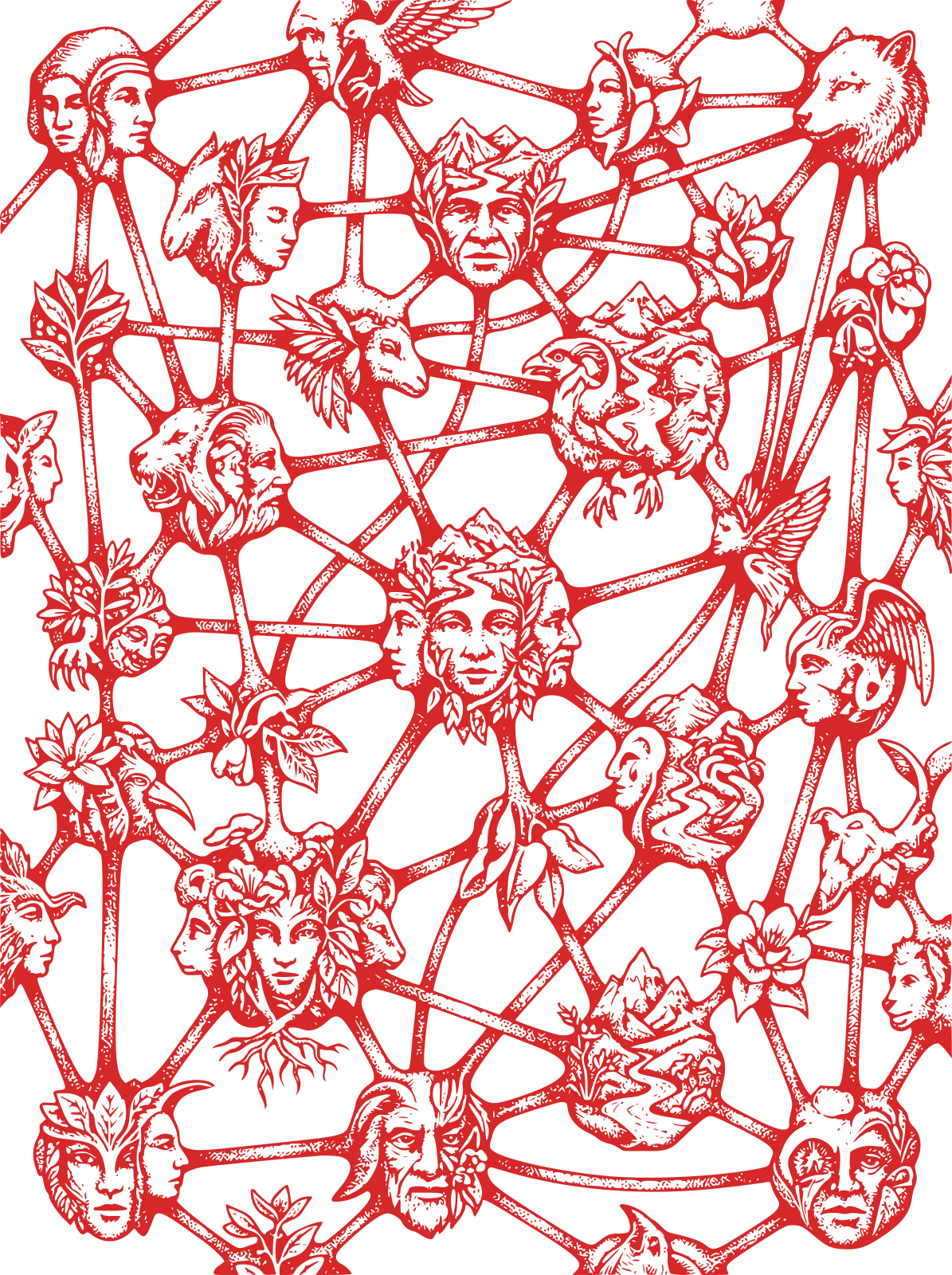
Neo-Confucianism in the Song dynasty, the eleventh through thirteenth centuries, took the Confucian relational frame and extended it cosmologically. Zhu Xi's synthesis built on the I Ching to argue that the principle (li) that orders ethical relationships is the same principle that orders the cosmos — that the relational fabric of human society is one expression of the relational fabric of all phenomena, from heaven and earth to the trinity that includes the human as one element rather than as the sovereign apex. The non-anthropocentrism of the Chinese tradition runs through Confucianism, Daoism, and the Buddhism that arrived from India and was sinicized into Chan and Pure Land schools. None of these traditions placed the human at the metaphysical center of the universe. Each placed the human within a larger order whose maintenance was a participatory rather than dominating activity.
Wang Yangming, in the fifteenth and sixteenth centuries, brought Neo-Confucianism to its most sophisticated form. Wang's central claim was that knowledge and action are unified — that to truly know the good is to act on it, and that what looks like knowing without acting is not knowing at all but a kind of intellectual performance. This sounds abstract. It is operationally specific. It means that the test of a moral concept is whether it shapes behavior in the moment of decision, not whether it can be discoursed about in a philosophical seminar. The Wang Yangming inheritance is one reason Yi Zeng can say, today, in a research paper that will be read by computer scientists at Stanford and Oxford, that benevolence is an engineering constraint. The claim is not eccentric. It is structurally continuous with five hundred years of Chinese philosophical insistence that knowing and doing are not separate.
Then the twentieth century, which broke a great deal but did not break this.
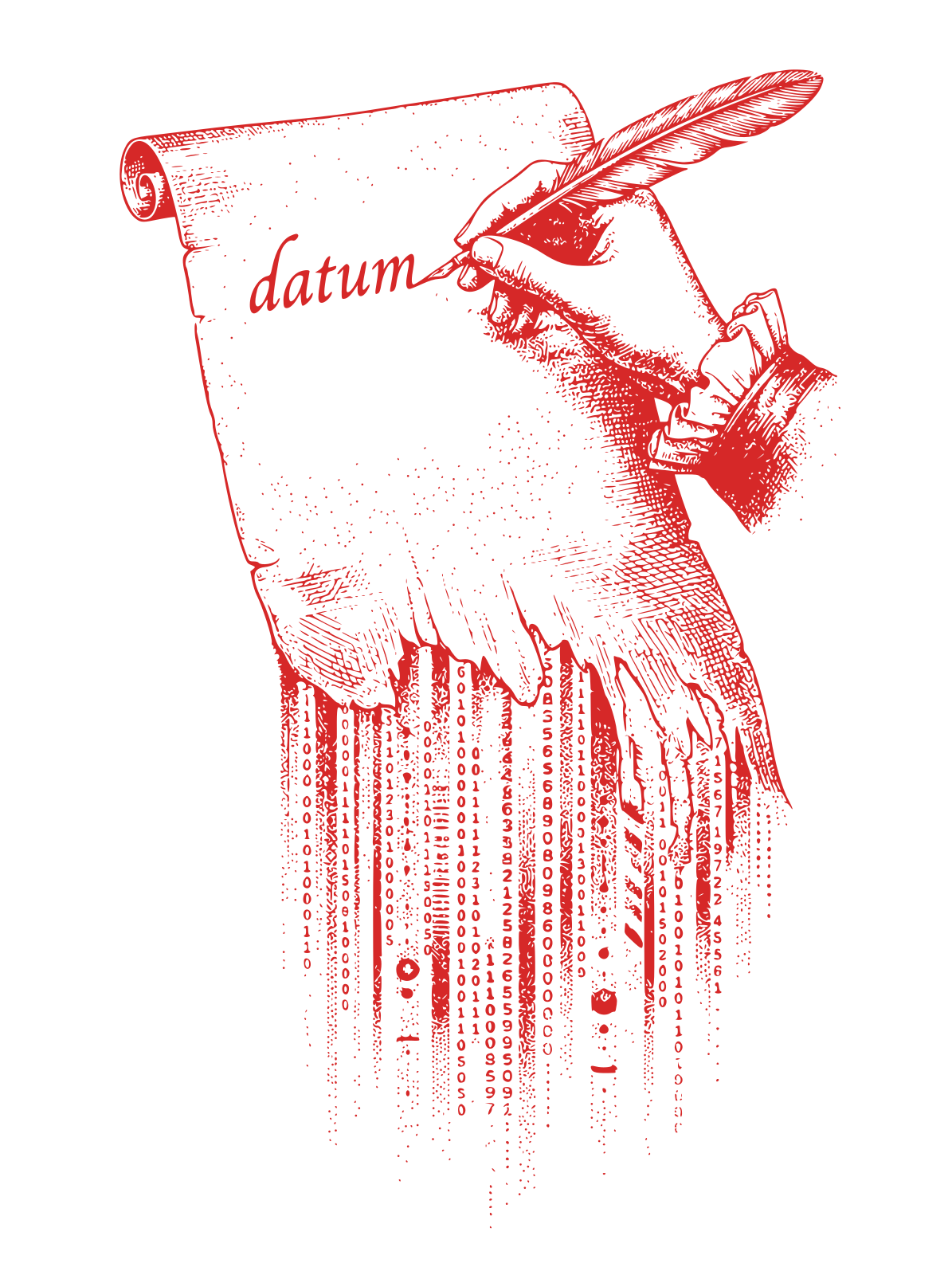
The Confucian tradition was attacked from multiple directions during the May Fourth movement and the Cultural Revolution. Chinese reformers, beginning in the early 1900s, blamed Confucianism for the country's vulnerability to Western and Japanese power. The Cultural Revolution, two generations later, attempted to extirpate "feudal thought" with a thoroughness that destroyed temples and burned books and sent intellectuals to be re-educated. The damage was real. But the underlying philosophical orientation — the relational ontology, the non-anthropocentrism, the conviction that wisdom is more important than intelligence — survived in part because it had been carried by the practices of ordinary life, by family structure, by the ritual texture of weddings and funerals and seasonal observances, by the habits of mind that the formal philosophical system had codified but not invented. The Communist Party, in its various phases, has shifted from suppression of Confucianism to selective rehabilitation. The current Chinese state, under Xi Jinping, has explicitly embraced significant aspects of the Confucian inheritance, particularly the relational conception of governance and the substantive theory of the public good.
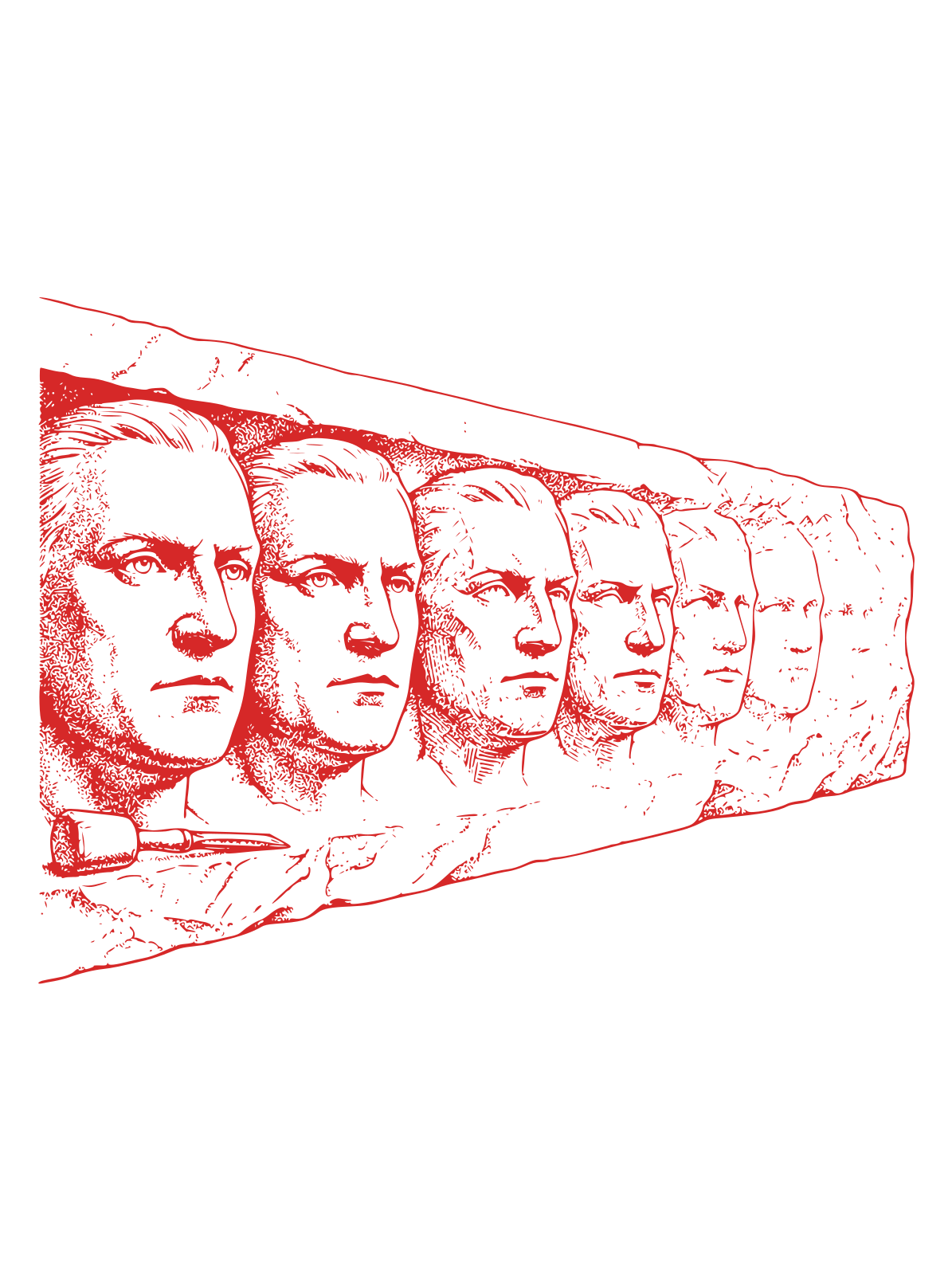
This is the philosophical air in which Chinese AI development breathes.
It is not a posture. It is not a marketing strategy. It is the inherited intuition about what governance is for, what the individual is, what the civilization is meant to maintain, what a powerful new technology is supposed to be evaluated by. When Yi Zeng's research program at the Chinese Academy of Sciences treats harmony as a structural property that can be specified and engineered, the move is not exotic given his intellectual inheritance. It is the natural extension of the inheritance into the contemporary technical context. When Bing Song's editorial work on Intelligence and Wisdom brings nine Chinese philosophers into conversation with the AI moment, the move is not the importation of a foreign perspective into a universal technical conversation. It is the explicit articulation of a philosophical tradition that has been present in the Chinese conversation about AI all along, often as background, sometimes as foreground.
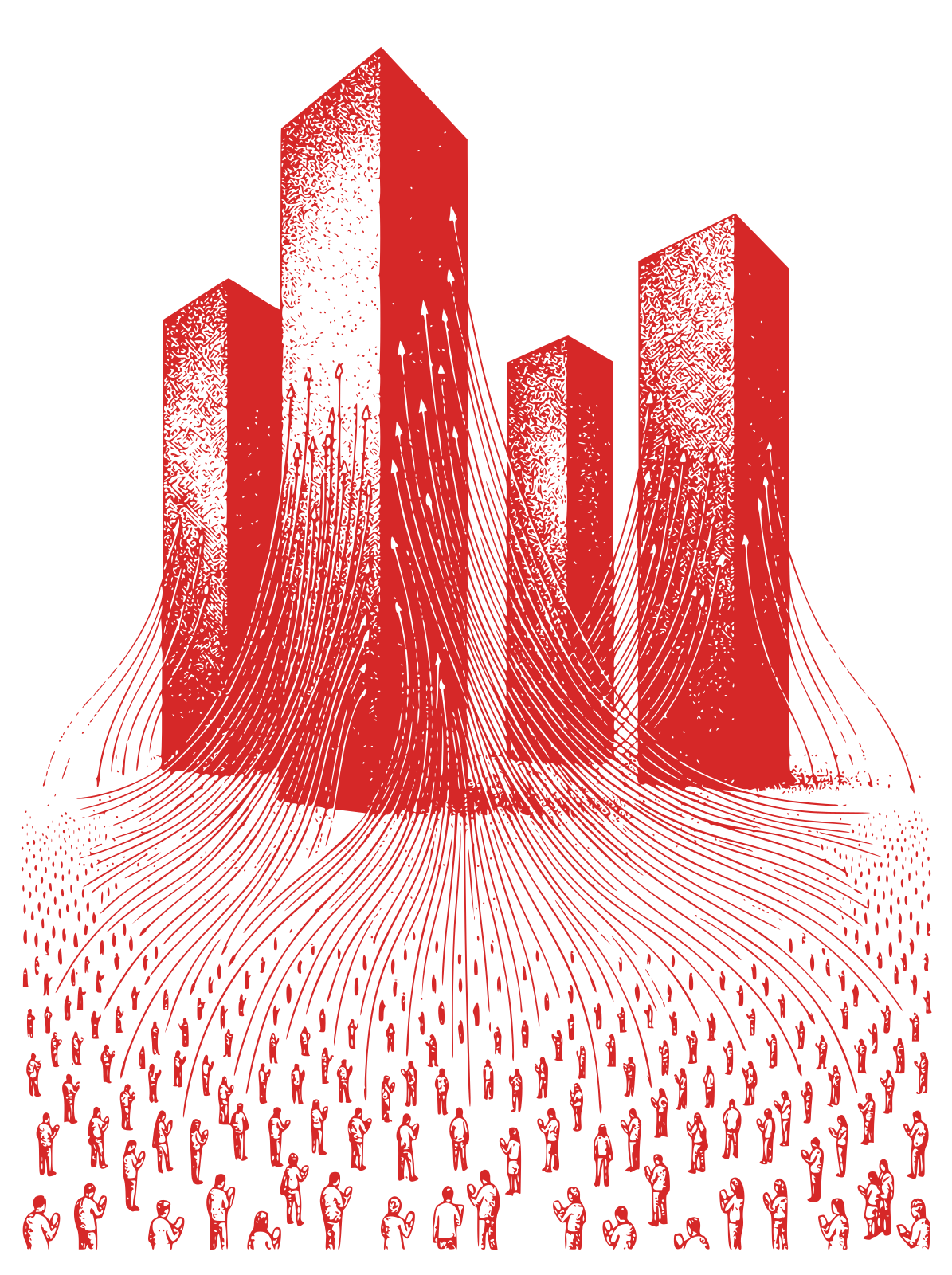
The specific technical implications follow. Chinese AI ethics frameworks tend to evaluate AI deployment by its effects on the relational fabric of society, not primarily by its effects on individual rights. Chinese governance frameworks tend to assume that the state is a substantive participant in AI development — with its own theory of the public good and its own legitimate interests in shaping where the technology goes — rather than an external regulator constraining a separate market actor. Chinese consumer-facing AI deployment tends to be evaluated by what it does for the population it serves at the scale of that population, not by whether it provides the most capable model at the frontier. None of these tendencies is universal across Chinese AI actors. None is unique to China. What is true is that the philosophical pressure all runs in a consistent direction, and the direction is structurally continuous with the inheritance.
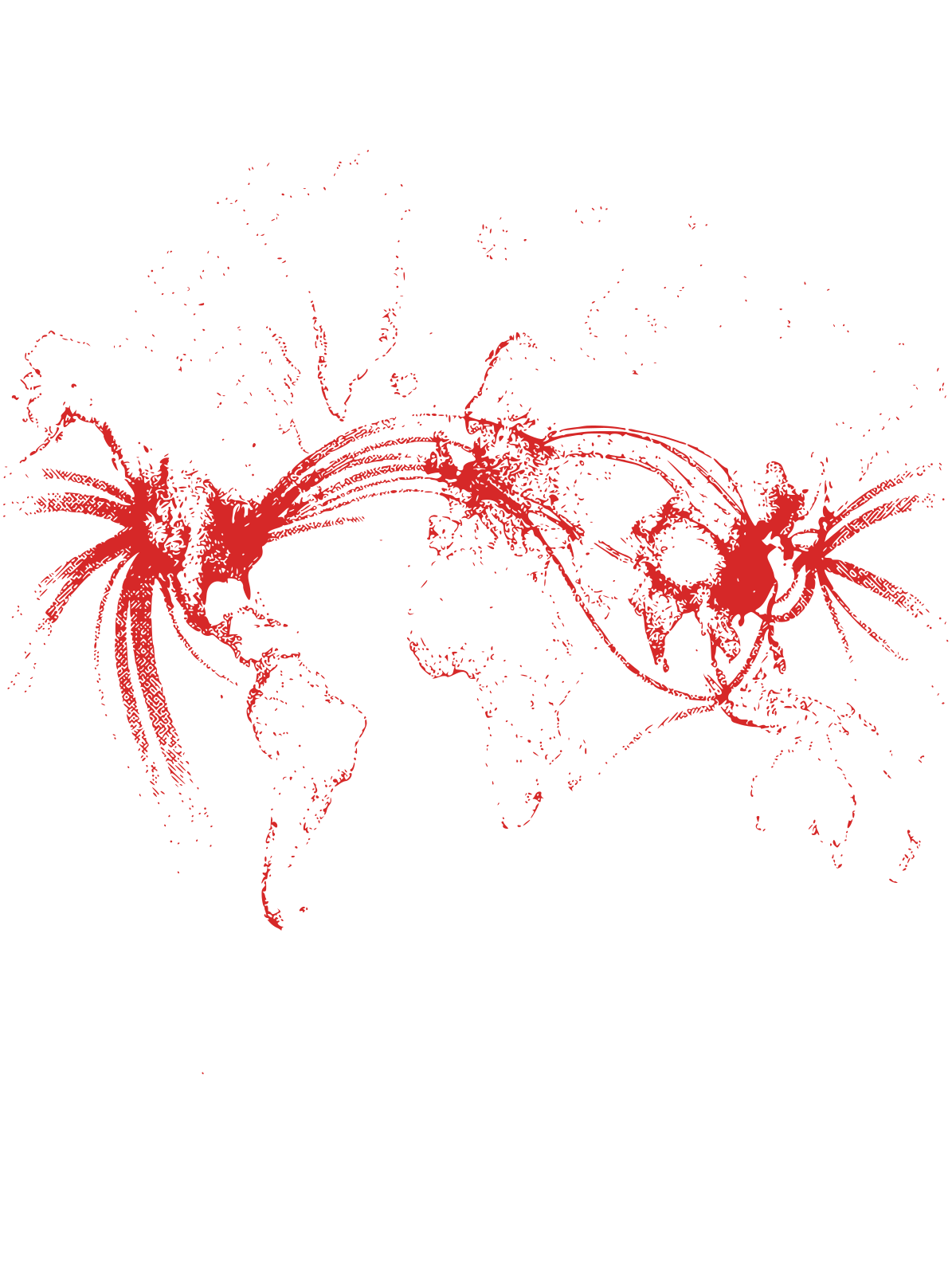
There is a tendency in Western AI discourse to read Chinese AI development through one of two reductive lenses. The first reads it as Western AI plus authoritarianism — the same technology, the same goals, with the unfortunate addition of state control. The second reads it as Western AI minus innovation — the same technology, deployed less ambitiously, lagging behind. Both readings miss what is structurally distinctive about Chinese AI. The Chinese AI program is not a deviant version of the Western program. It is a different program, animated by a different theory of what AI is for, evaluated by different criteria, embedded in a different institutional ecology.
Whether this program produces better outcomes than the Western program is a question this book is not in a position to answer. Whether it produces different outcomes — different deployments, different governance frameworks, different distributional consequences, different effects on the relational fabric of the civilization that adopts it — is a question to which the answer is already visible. The deployments are different. The frameworks are different. The consequences are different.
The river is two and a half thousand years old. The river is still flowing. The river has reached the data center.
Now we have to follow the other river, which is reaching the same data center from a different direction, carrying different water.