Mark Zuckerberg — Open Source as Power Distribution
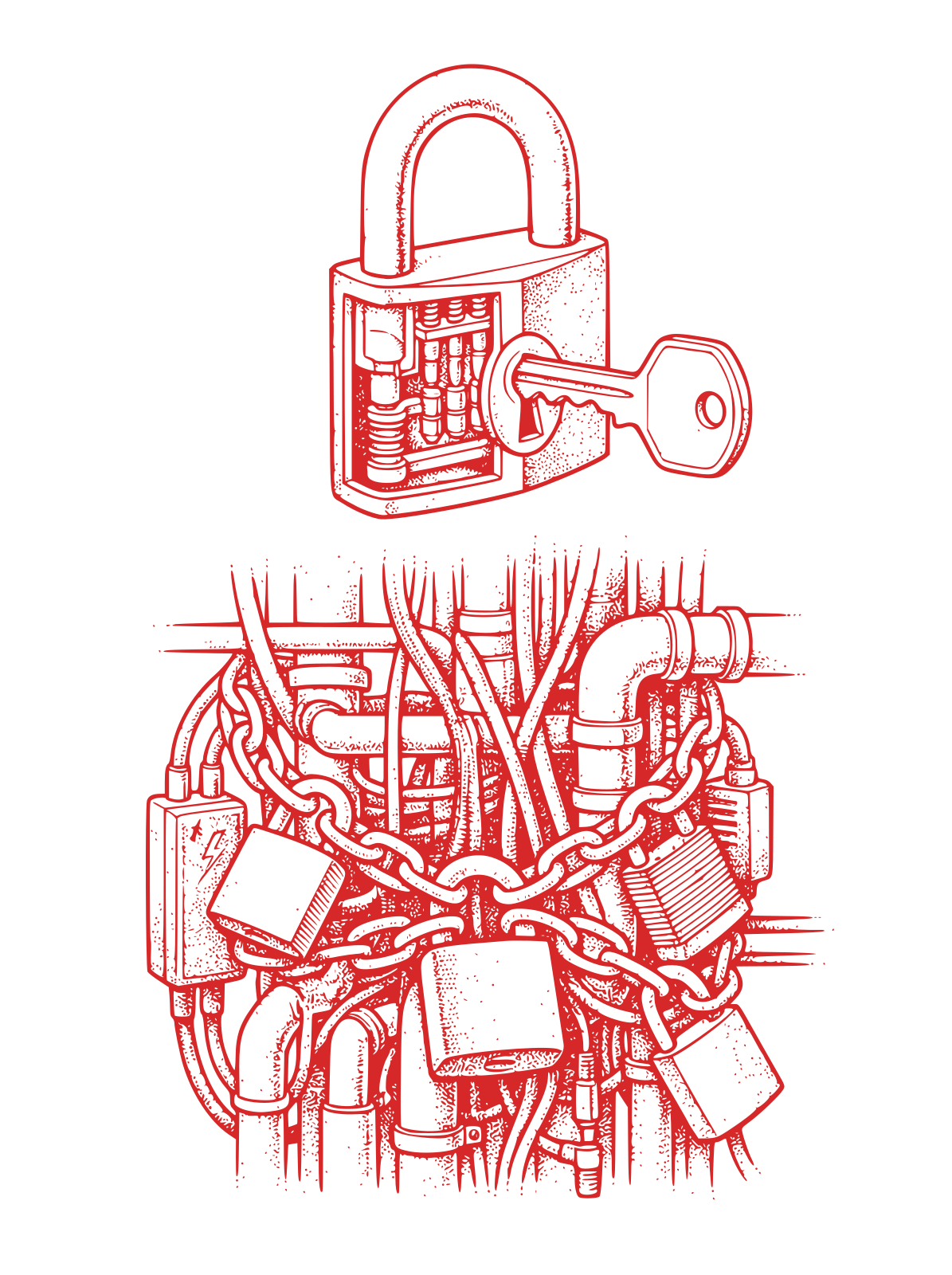
The most consequential strategic bet of Mark Zuckerberg's AI era is not any specific model capability. It is the decision to release Llama weights under open licenses. This decision is worth examining carefully, because the arguments for it are more substantive than either its proponents or its critics typically acknowledge.
Zuckerberg's 2024 essay "Open Source AI is the Path Forward" makes three distinct claims. The first is empirical: open-source software ecosystems have historically outcompeted proprietary ones at the infrastructure layer. Linux, Apache, Python — the foundational stack of modern computing is overwhelmingly open. The second claim is ethical: concentration of AI capability in a small number of proprietary systems concentrates power in ways that are dangerous for democratic governance. The third claim is safety-related: open models allow independent security researchers to identify vulnerabilities that closed-system developers may miss or suppress.
Each of these claims is contested, but none of them is obviously wrong. The historical argument is well-supported. The ethical argument tracks genuine concerns about power concentration that have animated antitrust scholarship, political theory, and the open-internet movement for decades. The safety argument is the most actively disputed — critics argue that open weights lower the cost of misuse for bad actors and that the security benefits of open review are outweighed by the proliferation risks.
What makes Zuckerberg's open-source position interesting from a structural standpoint is its self-interested dimension. Meta is not the leading proprietary AI company. OpenAI and Anthropic have more capable frontier models and more research talent in certain areas. Open-sourcing Llama is a way of commoditizing the infrastructure layer, which reduces the competitive advantage of those who would otherwise charge for access to it. This is classic platform economics — make the complements cheap to make the system you control more valuable.
This structural analysis does not invalidate the ethical argument. Both things can be true simultaneously: open-sourcing can be genuinely democratizing and strategically advantageous for Meta. The interesting question is whether the two motivations produce the same policy in the long run.
When Meta releases a competitive AI model as open source, it is executing a maneuver that has a precise name in platform economics: commodity complementation. The logic runs as follows. If the AI model layer commoditizes — if capable models are freely available to anyone — then the value migrates to the layers that sit above and below it. Meta's business sits above the model layer (user-facing products and advertising) and is building toward the hardware layer below it (custom silicon, data centers, smart glasses). Making the model layer free strengthens both of these positions.
This is not a cynical observation. It is a description of how technology ecosystems evolve, and Zuckerberg has been more explicit about this logic than most. The comparison he has drawn to Linux is precise: Linux commoditized the operating system layer, which destroyed the business models of commercial Unix vendors but created the conditions for everything that runs on Linux today. The commoditization of AI models, in his framing, will similarly destroy certain incumbent advantages while creating a richer ecosystem above and below.
The implication for AI development broadly is significant. If the model layer commoditizes — if there is genuine open-source competition at the frontier — then the differentiation in AI products will come from data, from distribution, and from the quality of the user-facing applications built on top. These happen to be exactly the assets Meta possesses in quantity. Three billion users generating continuous behavioral data is a moat that no model weight release can dissolve.
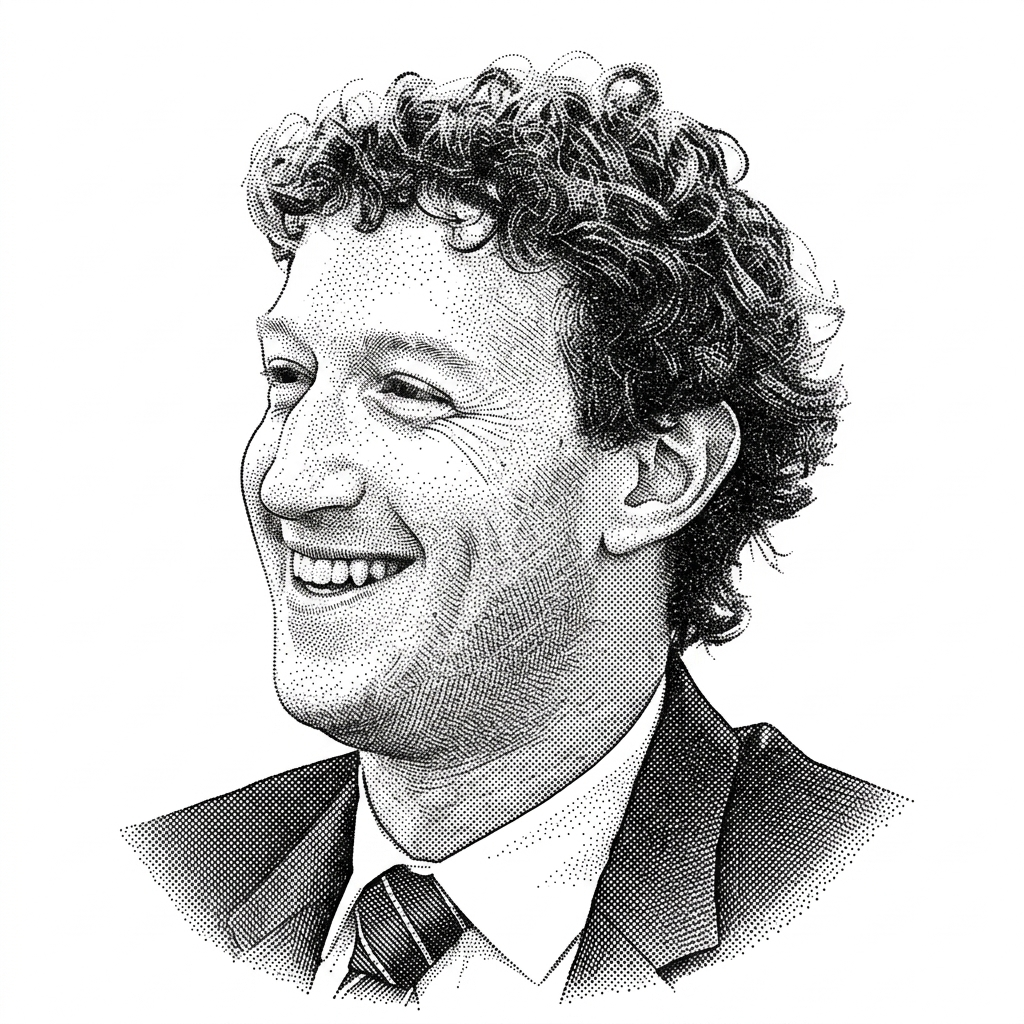
There is a counterfactual worth considering. If Meta had not released Llama, the frontier model landscape would be less competitive and more concentrated around OpenAI and the Google ecosystem. Llama's release forced a recalibration of what competitive capability looks like and lowered the barrier for researchers, startups, and national AI programs that lack the resources to train frontier models from scratch. The geopolitical dimension of this is real: open models have become a resource for AI development programs in countries that cannot afford to license proprietary frontier models.
The most counterintuitive consequence of Zuckerberg's open-source bet shows up in the Robin Li chapter of this book and will be examined in Chapter 25 of Part IV. Li, the Chinese AI executive, is the closed-source contrarian. Zuckerberg, the American AI executive, is the open-source ideologue. The cliché — that the West is open and China is closed — collapses on inspection. It collapses because "open" and "closed" do not mean the same thing depending on whether the relevant user is the autonomous individual or the relational civilization. Distributed weights to three billion individual nodes do not constitute pluralism if the nodes are embedded in surveillance and power asymmetries the weights do not address. A vertically integrated stack serving 1.4 billion people in their specific language and cultural context does not constitute monopoly if the alternative is dependency on foreign infrastructure that does not know them.
This is the structural point Zuckerberg's open-source bet illustrates without resolving. Open weights distributed at planetary scale are a real form of power distribution. They are also, by the same token, an indifferent form of power distribution. The weights do not know whether the user receiving them is a democratic activist in Lagos or a surveillance state in a country whose government wants to suppress dissent. The weights do not know whether the application built on top of them is a tool for collective deliberation or a tool for atomized commercial extraction. The open-source frame distributes the capability and leaves the substantive question — what is the capability being used for, by whom, with what consequences for the relational fabric of which civilization — to the contingent outcomes of three billion individual deployment decisions.
This is the most American thing about the Zuckerberg position. The distribution is to individuals. The decisions about use are made by individuals. The aggregation of individual decisions produces, by the operation of the markets and the platforms and the political institutions in which the individuals are embedded, whatever civilizational outcome the aggregation produces. The substantive question of what the technology is for is delegated to the individuals, on the assumption that the individuals' free choices will, in aggregate, produce the right answer.
The Confucian frame would not have produced this bet. The Chinese AI ecosystem, while it includes open-source contributions (DeepSeek being the most prominent recent example), does not treat open weights as the load-bearing answer to the question of how AI should be developed. The Chinese frame treats the substantive question as prior. What is the technology for? Whose civilizational flourishing does it serve? What kind of relational fabric does it cultivate or erode? These questions cannot be answered by the simple distribution of weights. They require sustained institutional attention to the substantive content of what is being deployed and to whom.
Zuckerberg's bet, on his own articulation, treats this concern as misplaced. The concentration of substantive decision-making in any single entity is itself the deepest threat. Better to distribute the weights and let the substantive questions be answered by the aggregate of decentralized actors than to centralize the answer in a small number of institutions, however well-intentioned. The political philosophy underneath the bet is recognizably Jeffersonian: distrust of concentrated authority, faith in the aggregate of distributed individual judgments, willingness to accept the costs of the distribution in order to avoid the worse cost of the concentration.
This is a serious political philosophy. The American constitutional tradition was built on it. It has produced, over two and a half centuries, one of the most successful institutional experiments in human history. It is also a philosophy with specific blindspots, and the blindspots become visible at the scale at which the AI deployment is now occurring.
The deepest blindspot is what Yi Zeng would call the wisdom gap. Distributing capability to billions of individuals does not, by itself, distribute the wisdom required to deploy the capability well. The wisdom is cultivated through specific practices — sustained engagement with substantive traditions, mentorship, the slow development of judgment through experience and reflection. The wisdom is not distributed by the same mechanism that distributes the weights. The open-source distribution can — and at the scales now operating, does — outrun the wisdom distribution by orders of magnitude. The result is billions of individuals with access to capability they have not yet been cultivated to deploy responsibly. The aggregate of their decisions is not, contra the Jeffersonian assumption, automatically producing the right substantive answer to the question of what the technology is for.
This is not a Western critique of the open-source position. It is a structural critique that emerges naturally from the Confucian frame and that the open-source frame has structural difficulty registering. The disagreement is not about whether open-source is good or bad. The disagreement is about whether the substantive question of what the technology is for can be adequately answered by the aggregate of distributed individual decisions, or whether the substantive question requires sustained institutional cultivation that the distribution alone does not supply.
Zuckerberg's frame answers the first version of the question. The Confucian frame insists on the second. Both frames are serious. The disagreement runs through every concrete decision about how AI infrastructure should be built and governed in the next decade.
[YOU] on AI asks what is worth amplifying. Zuckerberg's open-source bet answers, in effect: the capacity to amplify is worth amplifying. Distribute the amplification mechanism. Let the individuals decide what to amplify with it. Trust the aggregate of decentralized decisions to produce, over time, the substantive outcomes that any specific centralized answer would produce worse.
This is one answer. It is not the only answer. The Confucian River produces a different one. The bridge in Part V is going to require both answers to be brought into the conversation that has not yet been organized to receive them.