What the Promethean River Cannot See
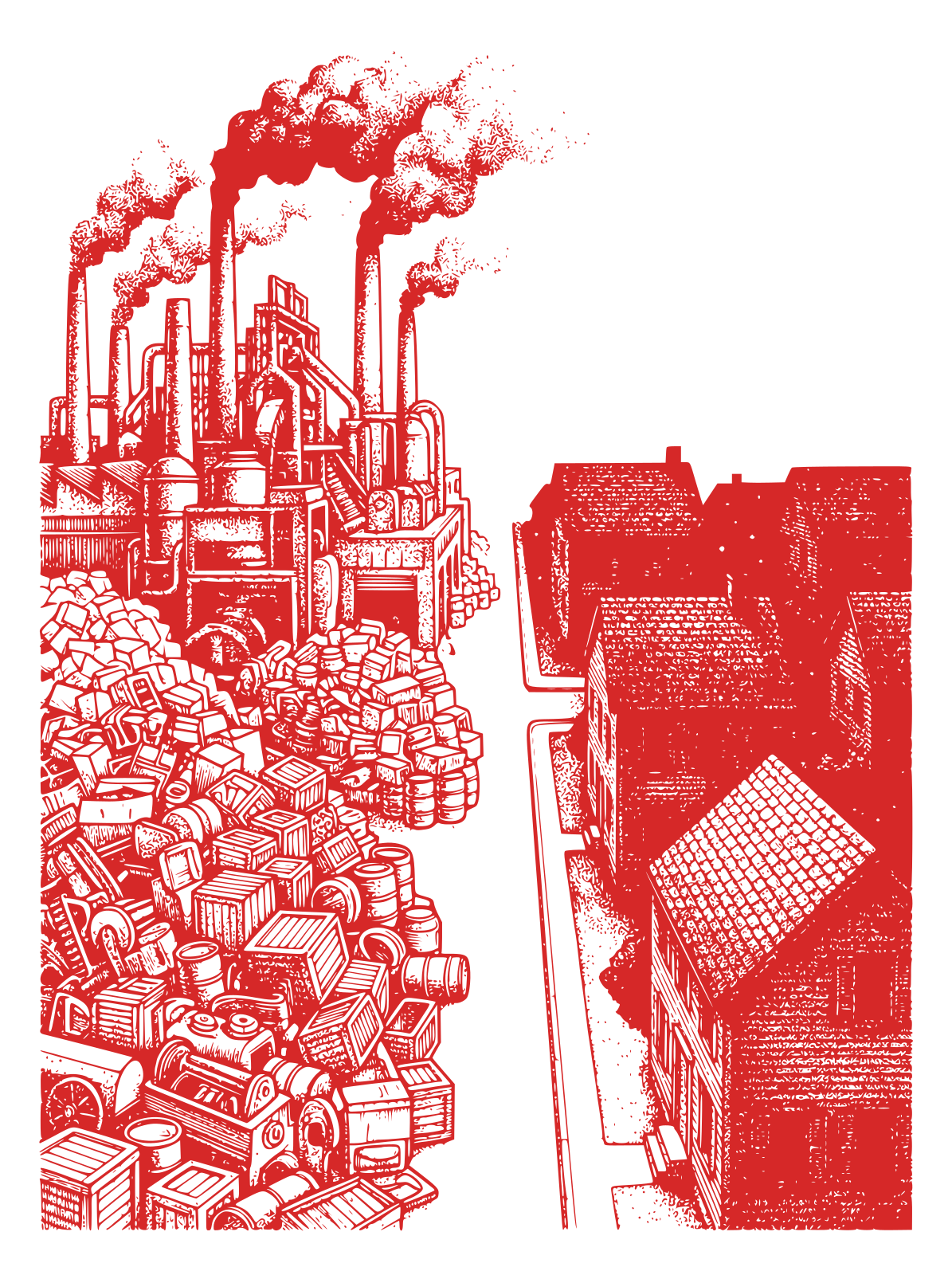
The Promethean River's blindspot is the mirror of the Confucian River's. Each river's greatest strength is, by the same structural logic, the source of its most consequential difficulty. To take the river seriously is to take its shadow seriously. This chapter names the shadow.
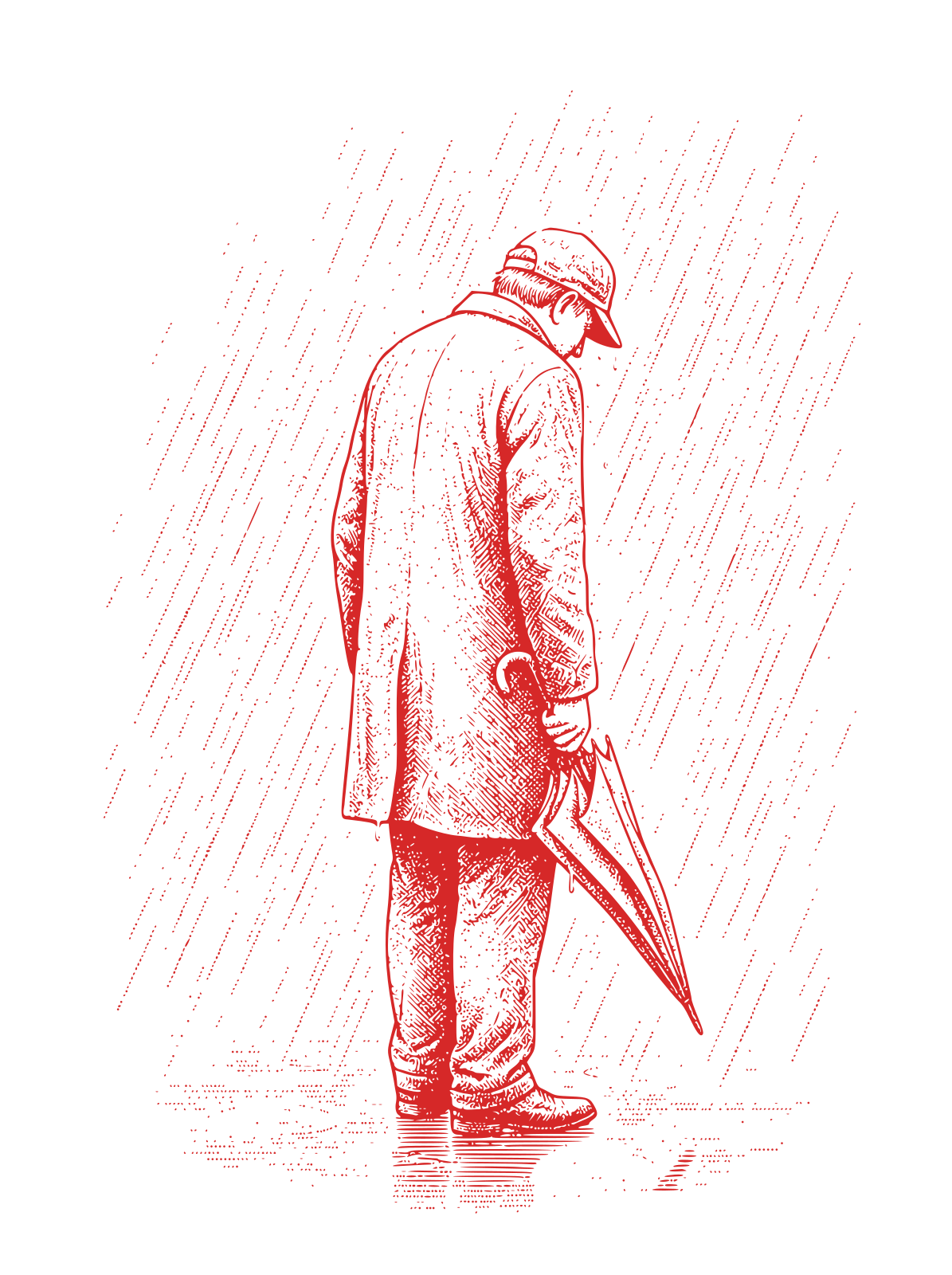
The first shadow is the relational fabric — the thing the Confucian River is organized to protect — does not appear in the Promethean River's vocabulary because the autonomous individual is the unit of analysis, and the fabric is invisible when you zoom in on each node.
Altman's abundance reaches every individual. Whether it reaches the relationships between individuals — the marriages, the communities, the guilds, the cultures — is a different question. The river runs fast and cannot see its own banks.
This is the deepest blindspot, and it requires careful articulation because the Promethean voices are not, in any simple sense, indifferent to the relational fabric. They care about families. They care about communities. They care about democracy. They are not monsters. The issue is not that they do not care. The issue is that the structural frame they operate inside does not have, in its vocabulary, the concepts required to see the relational fabric as a primary object of stewardship. The fabric appears, in the Promethean frame, as a side constraint on the primary work of individual capability development and distribution. The fabric is something that the right policies will, presumably, take care of. The fabric is not the load-bearing measure.
When Altman articulates the abundance thesis, the picture in his mind is of individuals freed from economic necessity. The picture is not of the institutions, practices, and relationships through which the freed individuals will, in the post-abundance world, find meaning and community and a sense of being part of something larger than themselves. The relational fabric is present, as a presupposition, but it is not addressed. The assumption is that if you give the individuals the resources, the fabric will take care of itself — that the individuals, given the freedom, will reconstruct or maintain the fabric through their own free choices.
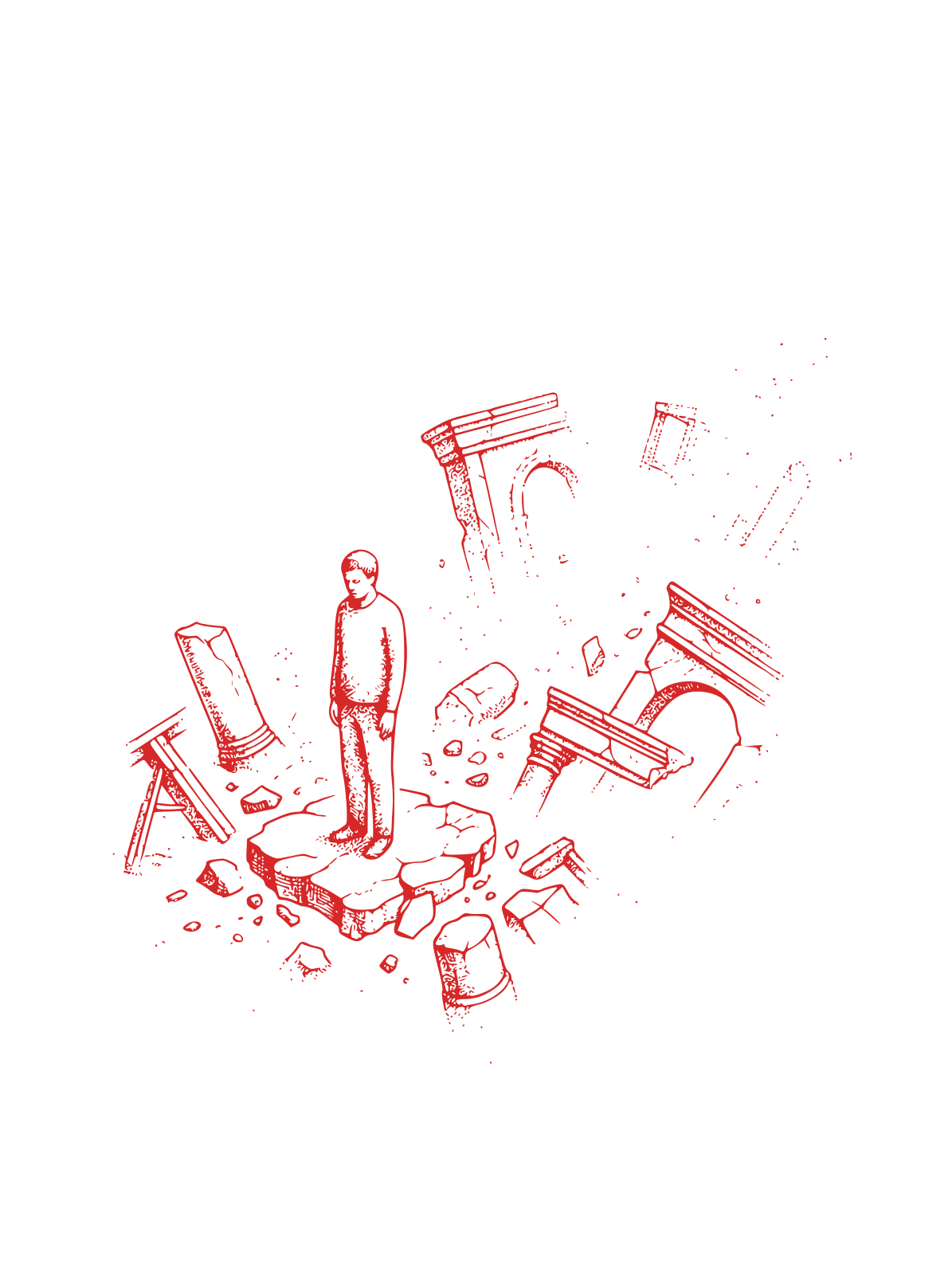
This is, on the Confucian view, structurally wrong. The relational fabric is not a thing individuals reconstruct from scratch through their free choices. It is a thing that requires sustained collective cultivation through specific practices and institutions that are not generated by aggregating individual decisions. The marriages, the communities, the guilds, the cultures — these are produced by historically specific traditions and practices that have been developed over generations and that require active maintenance. When the technology disrupts the conditions under which the maintenance is possible — when AI substitution removes the work through which professional guilds reproduced themselves, when AI mediation alters the texture of family interaction, when AI personalization fragments the shared epistemic environment through which community is sustained — the fabric does not automatically reconstitute. It erodes. The erosion is invisible from inside the frame that does not have the fabric in its vocabulary.
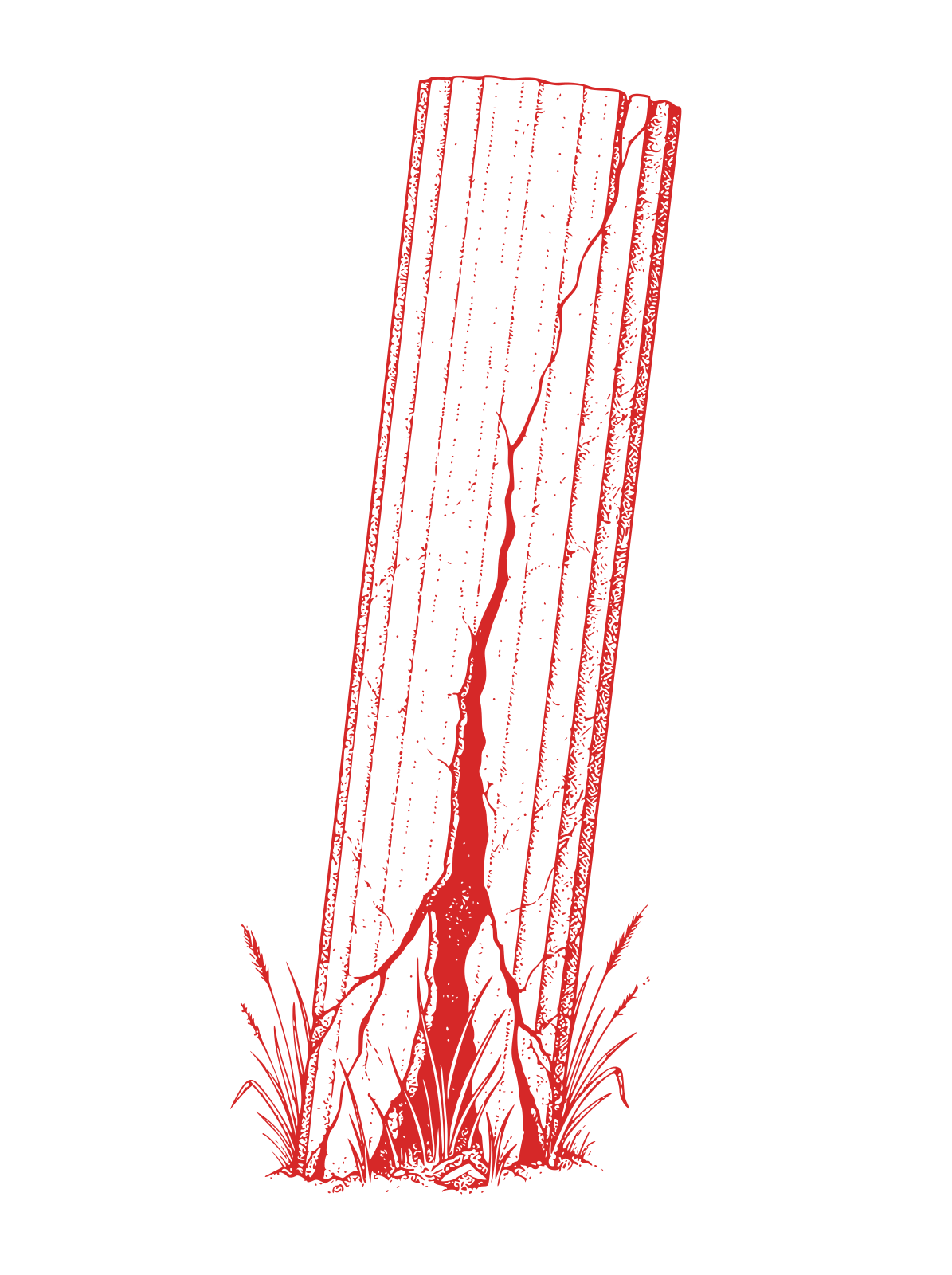
The Promethean River produces, with the best of intentions, civilizational outcomes that the Promethean frame is structurally unable to register as costs. The individual gets the abundance. The community gets the erosion. The aggregate metrics — GDP, individual welfare, capability access — register the gains. The aggregate metrics do not register the losses, because the losses are at a level the metrics are not designed to measure.
The second shadow is structurally related and bears its own name. The frame's commitment to the autonomous individual as the load-bearing unit makes it difficult to address forms of harm that operate at the level of populations, of communities, of relational systems. The frame has well-developed apparatus for protecting individual rights against intrusion. The frame has less developed apparatus for protecting collective conditions against erosion.
This shows up in concrete policy debates. The American AI governance discourse is organized around questions like privacy, consent, individual non-discrimination, individual liability for AI harms. These are real questions and the protections that have been built around them are real protections. What the discourse has more difficulty addressing — and what the procedural apparatus has more difficulty operationalizing — is questions like the cultivation of collective epistemic conditions, the maintenance of professional communities of practice, the preservation of cultural traditions whose continuity depends on practices that AI substitution interrupts.
The European AI Act, by way of contrast, has more developed apparatus for some of these collective-level concerns. The Chinese AI governance framework has more developed apparatus still. The American frame, with its strong individualist inheritance, treats the collective concerns as secondary or treats them as the aggregation of individual concerns rather than as primary phenomena requiring direct attention.
The third shadow concerns the wisdom gap — Yi Zeng's framing of the widening distance between capability and the cultivated capacity to deploy capability well. The Promethean River has structural difficulty registering this gap as a primary concern. The frame's focus on capability advancement treats wisdom as either (a) downstream of capability, on the assumption that the right institutions will, presumably, develop the wisdom required to deploy the capability, or (b) orthogonal to capability, on the assumption that wisdom is a separate domain that capability advancement does not affect.
Both assumptions are, on the Confucian view, mistaken. Wisdom is not downstream of capability. The deployment of powerful AI can erode the conditions for human wisdom cultivation. The capability outruns the wisdom not as a temporary lag but as a structural feature. The institutions that would, on the first assumption, develop the wisdom are themselves being disrupted by the capability deployment. The educational systems that cultivated the previous generation's wisdom are being substituted by AI tutoring that may produce different cognitive profiles. The professional communities that transmitted tacit knowledge through mentorship are being substituted by AI assistance that may interrupt the transmission. The cultural traditions that produced civilizational wisdom over generations are being mediated by AI-curated information environments that may fragment the continuity.
The Promethean frame has trouble seeing this because the frame treats capability and wisdom as separate variables. The Confucian frame insists they are coupled — that the deployment of capability changes the conditions under which wisdom can be cultivated, and that the failure to attend to the coupling produces a civilization of powerful AI and diminished wisdom, which is structurally dangerous in ways the procedural apparatus cannot remedy.
The fourth shadow is the tempo problem. The Promethean River operates at a tempo that the procedural apparatus has barely been able to keep pace with and that the substantive philosophical conversation has not been able to keep pace with at all. Amodei has been more honest than most about this. The compressed twenty-first century framing is, at its core, an admission that the institutional response is going to be inadequate to the tempo the technology is going to demand. The frame's response is to attempt to build the institutions on a compressed timeline. The frame's response is not, generally, to slow the technology to match the institutional response capacity. The frame's response presupposes that the technology will move at the tempo the technology is going to move at, and the institutions will have to keep up or fail to keep up, and the consequences of failing to keep up will be distributed across the populations that bear the cost of the transition.
The Confucian frame would, in principle, treat the tempo as a variable to be addressed. The cultivation of wisdom takes time. The maintenance of relational fabric takes time. The development of substantive governance institutions takes time. The technology that outruns these processes is, on the Confucian view, structurally too fast. The appropriate response is to slow the deployment to match the cultivation capacity. The Confucian frame does not, in practice, have the institutional levers to actually slow the global AI deployment. But the frame would, on its own articulation, insist that the appropriate response to the tempo problem is to address the tempo, not to attempt to build institutions at the tempo the technology happens to be moving at.
The Promethean River has the opposite reflex. The technology moves at the tempo the technology moves at, and the institutional response has to compress to match. The compression has costs. The costs are paid by the populations that bear the transition. The frame treats these costs as regrettable but, in its own articulation, unavoidable. The alternative — slowing the technology to match the institutional response capacity — is not, in the Promethean frame, a serious alternative, because the technology will be built by someone, somewhere, at the tempo the technology can be built at, and the populations bear the cost either way.
This is a coherent frame. It is also a frame with specific blindspots. The Confucian frame would insist on at least asking the question of whether the tempo could be addressed. The Promethean frame, with its commitment to the capability variable and its structural skepticism about the institutional capacity to constrain capability advancement, treats the question as moot.
The fifth shadow is the most uncomfortable to articulate. The Promethean River has, in its institutional concentration, produced a situation in which a small number of frontier labs in a small number of geographies are making decisions whose consequences will affect billions of people who have no voice in the decisions. The frame's commitment to the autonomous individual makes this concentration philosophically uncomfortable. The frame's commitment to capability advancement makes the concentration practically inevitable. The frame has not yet resolved the tension between these two commitments.
The Confucian frame would have a different reading of the concentration. The civilizational state framework would treat the frontier labs as institutions exercising sovereign decision-making over technological deployment, and would insist on appropriate substantive governance that incorporated the perspective of the affected populations. The Confucian frame would not necessarily oppose the concentration — the Chinese AI ecosystem has its own forms of concentration — but would insist that the concentrated decision-makers be substantively governed by frameworks adequate to the civilizational stakes of the decisions they are making.
The American frame has procedural protections for individual rights against the concentrated decision-makers. The American frame has less developed substantive governance frameworks for the substantive content of the decisions. The result is a situation in which the frontier labs operate with a great deal of substantive discretion, subject to procedural constraints that protect individuals' rights but do not, in any deep sense, constrain the substantive direction of what the labs are building.
This is the shadow of the Promethean commitment to the autonomous individual. The commitment to individual rights produces strong protections at the level of the individual. The commitment does not produce strong protections at the level of the substantive direction of the technology. The substantive direction is, by structural default, left to the aggregate of individual decisions made by the small number of individuals in the rooms where the substantive decisions are made. The substantive question is not, in the American frame, naturally a question for collective democratic deliberation. The substantive question is, by default, a question for the builders.
This is, again, not a feature unique to the American frame. Every civilization has structural blindspots. The Confucian frame has different ones. The Western liberal frame has these ones. The combination — the procedural strengths of the Western frame plus the substantive depth of the Confucian frame — is what the situation requires. Neither tradition, alone, supplies what the situation requires.
[YOU] on AI asks the orange pill question. The pill makes the fishbowl visible. The Promethean fishbowl has produced extraordinary capability. The fishbowl has also produced specific blindspots — the difficulty of seeing the relational fabric, the difficulty of registering collective-level harms, the difficulty of attending to the wisdom gap, the difficulty of addressing the tempo problem, the difficulty of submitting substantive decisions to substantive collective governance. Naming these blindspots is not a Confucian critique. It is a structural one. The strength and the shadow are the same.
The Promethean River runs fast. The Promethean River cannot easily see its own banks. The banks are the relational fabric in which the river is flowing. The banks are eroding while the river celebrates its accelerating throughput. The banks need attention the river, by its structural commitments, has trouble providing.
The Confucian River, on the other side of the bridge, has spent two and a half thousand years studying the banks. The Confucian River has the tradition of attending to the fabric. The Confucian River has the substantive vocabulary the Promethean River is missing.
The next part of the book is going to bring the two rivers into direct confrontation, pair by pair, on the questions where each river's blindspot is most directly addressed by the other river's strength. Five head-to-heads. Five places where the rivers, brought into the same room, produce the conversation that neither, alone, was able to produce.
The conversation has not yet happened. The book is one attempt to begin it.
Keep climbing. The bridge is the next stop. The view from the middle is the only view this century is going to permit.