Robin Li & Mark Zuckerberg — What Open Means When the User Is a Civilization

The most counterintuitive pairing.

Mark Zuckerberg, the American, is the open-source ideologue. Distribute the weights. Commoditize the model layer. Prevent any single entity from controlling AI infrastructure. Make the foundational stack available to anyone who wants to build on it.
Robin Li, the Chinese, is the closed-source pragmatist. Open source is an "IQ tax." Closed-source models, supported by shared inference infrastructure and continuous feedback from the entire customer base, deliver better performance at lower cost. The full-stack vertical integration — chips, models, applications, data — is the only form of trustworthy infrastructure when the user is 1.4 billion people embedded in a specific language, culture, and regulatory system.
The cliché collapses on contact with the actual positions. The cliché is that the West is for openness and the East is for closure. The reality is that the American CEO is the radical democrat distributing weights to every user and the Chinese CEO is the vertical integrator insisting that closed proprietary stacks are the only trustworthy infrastructure at the scale he is operating.
What is "open" actually doing in each frame?
In Zuckerberg's frame, open is doing the work of power distribution. The structural concern is that a small number of proprietary AI companies will, if left to their own devices, control the cognitive infrastructure of the world. The concentration of substantive decision-making in that small number of actors is itself the deepest threat. Distributing the model weights to everyone — three billion individual users, every research lab, every startup, every national AI program — is the structural response that prevents the concentration. The open weights do not solve every problem. They do prevent the worst version of the problem: the version in which a tiny handful of actors control what billions of people can build with AI.
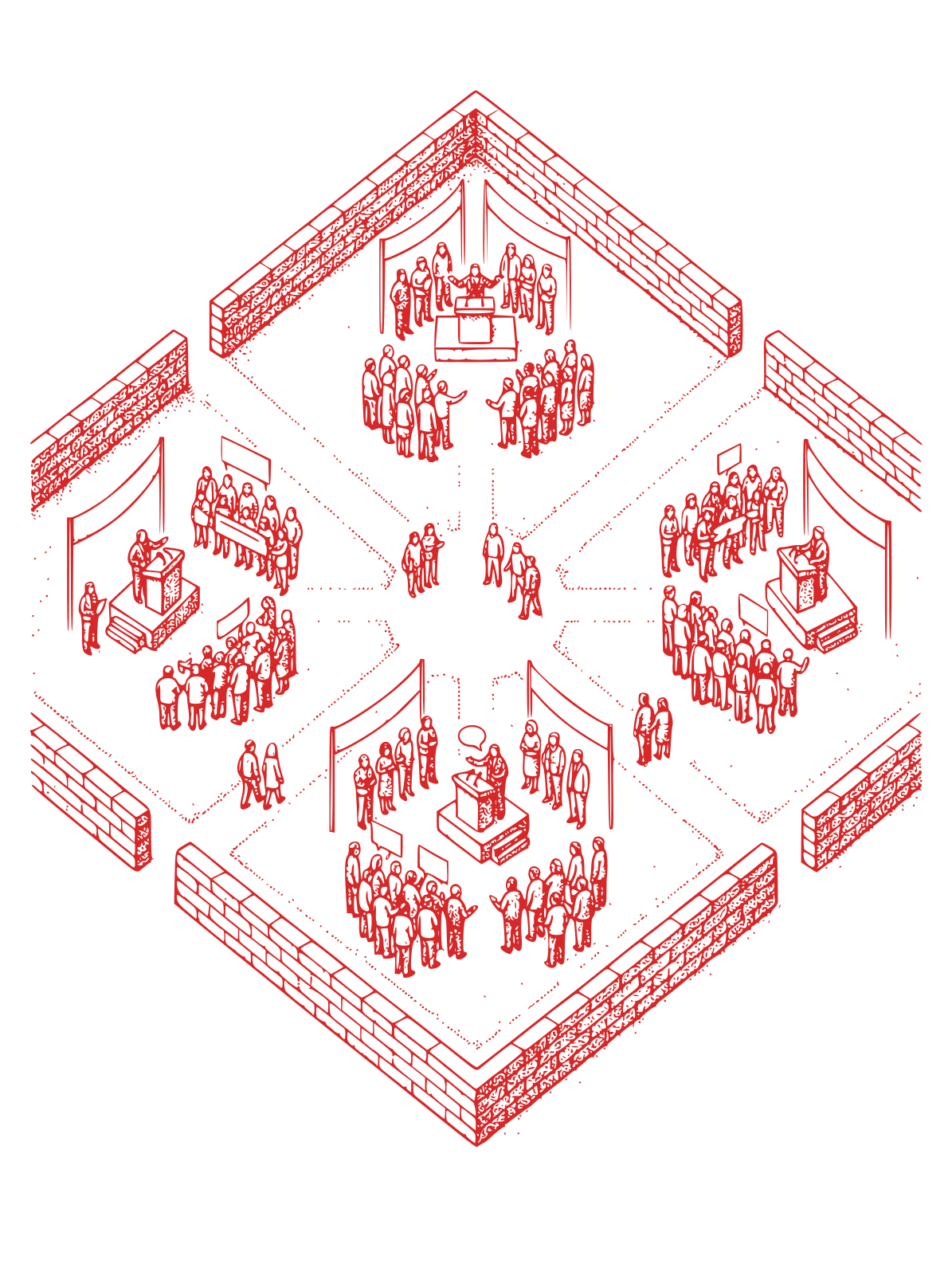
In Li's frame, open is doing the work of philosophical performance rather than the work of practical performance. The companies that have, on Li's analysis, the most credible commitment to delivering reliable AI at scale to Chinese users do so through closed, vertically integrated stacks. The infrastructure required to serve 1.4 billion users at affordable price points in Chinese-language workflows is infrastructure that no individual user can build for themselves. The proposition that the individual user should be empowered to build their own AI by being given the weights is, on Li's view, a category error — the relevant user is not the individual, the relevant user is the civilization, and the civilization needs infrastructure that operates at civilizational scale rather than weights distributed to billions of individuals who lack the resources to do anything substantive with them.
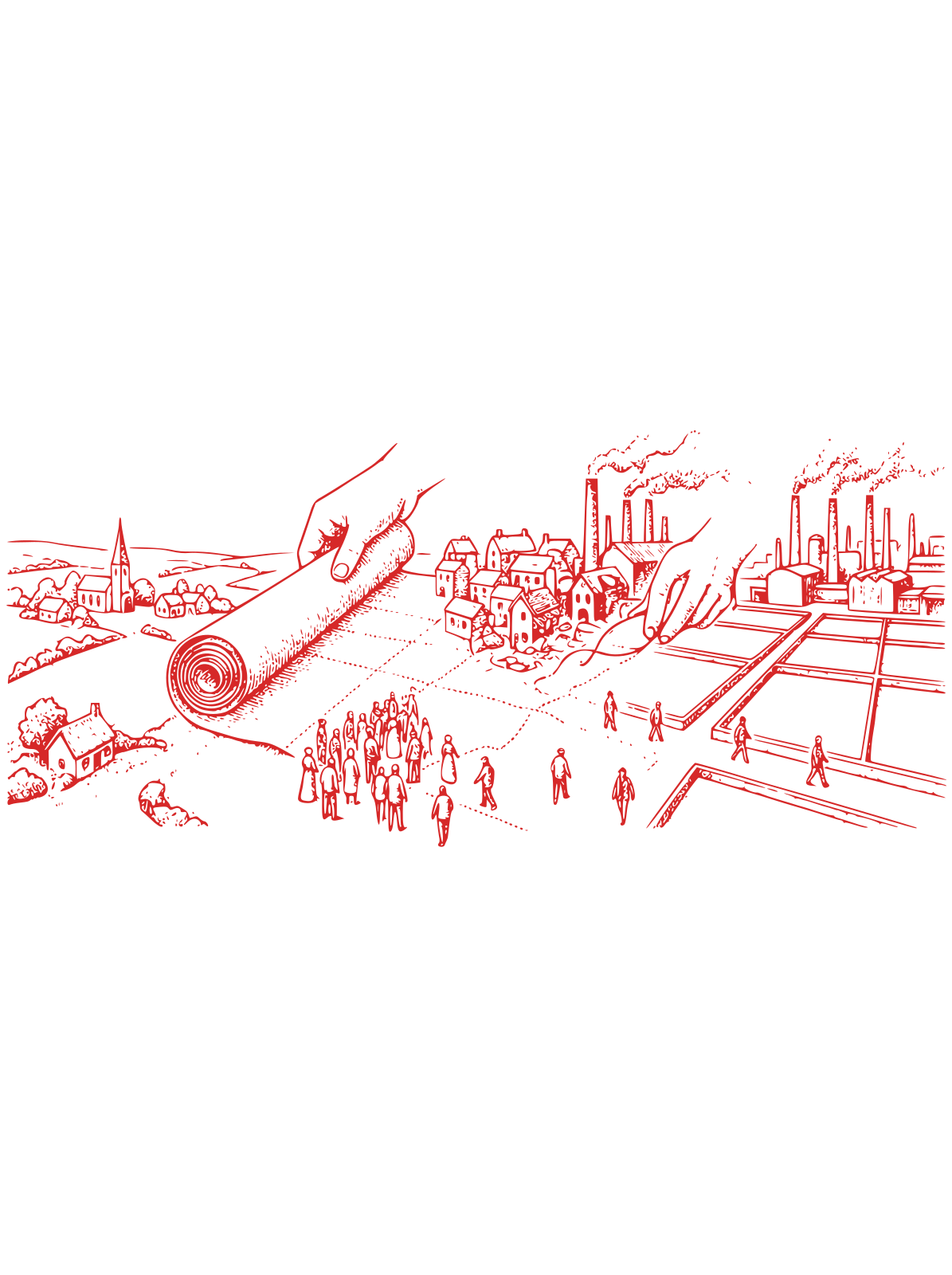
The disagreement is real and runs deeper than the surface positions suggest. It is, at its root, a disagreement about what kind of user the AI is being built for.
Zuckerberg's frame presupposes that the relevant user is the individual. The individual builder. The individual researcher. The individual startup. The individual national AI program. The individual is the agent for whom the technology is being made available, and the empowerment of the individual is the metric by which the open-source distribution is evaluated. Distributing the weights empowers each individual to build what they want with the technology. The aggregate of individual decisions, by the operation of decentralized markets and platforms, produces whatever civilizational outcome the aggregate produces.
Li's frame presupposes that the relevant user is the civilization. The 1.4 billion specific people Baidu has spent two decades learning how to serve. The Chinese language. The Chinese cultural context. The Chinese regulatory environment. The Chinese workforce in the middle of a generational economic transition. The civilization is the user. Serving the civilization requires infrastructure that operates at civilizational scale and that is calibrated to the civilization's specific needs. Distributing weights to individuals does not serve the civilization. It serves a different unit of analysis. The unit of analysis the open-source frame is built around is not the unit of analysis Li's frame is built around.
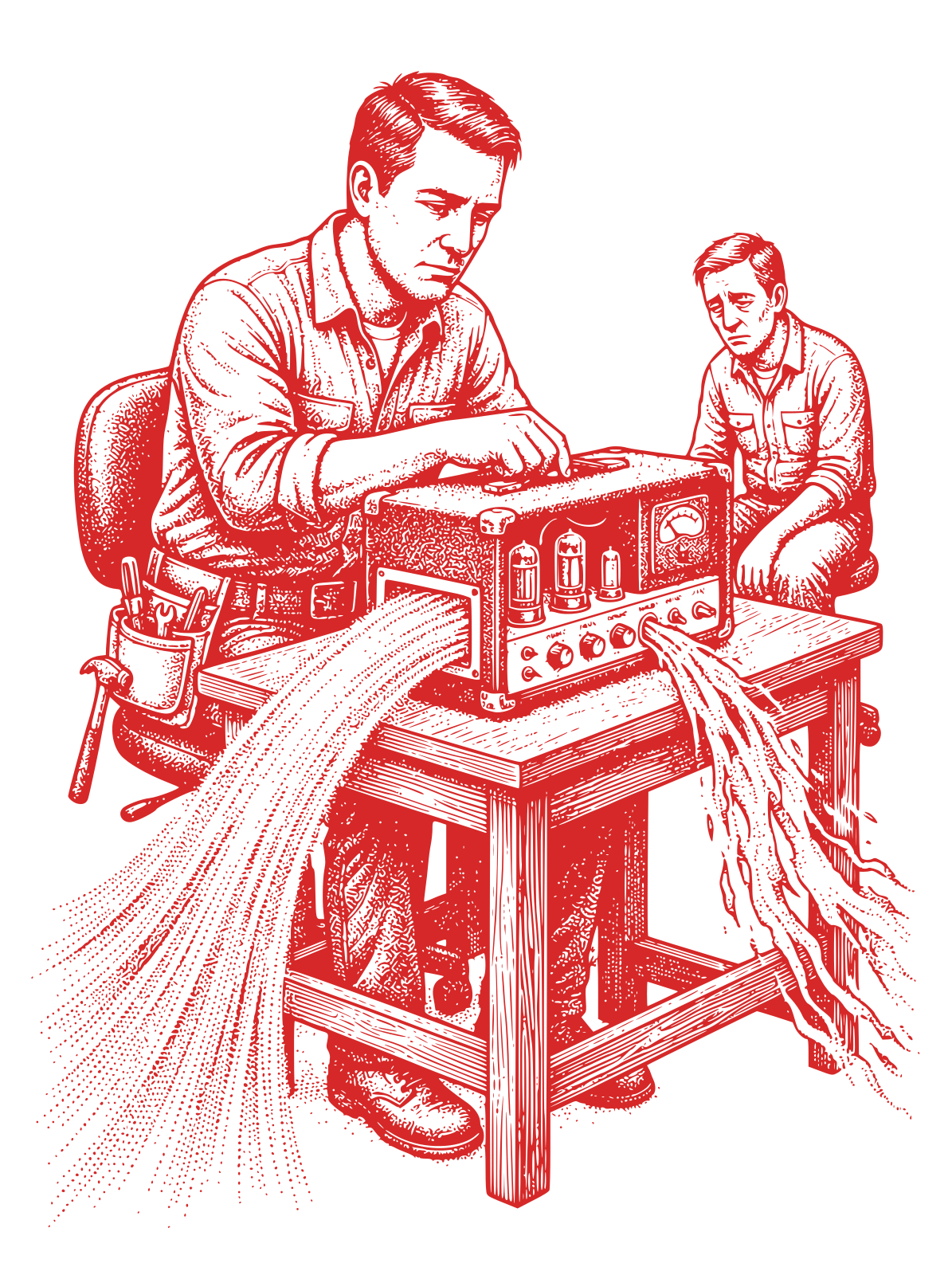
This is the place where what "open" means stops being a property of the technology and starts being a property of the conception of the user the technology is being built for. The same technology — open-weight models, available to anyone — has different meanings depending on whether the relevant user is the autonomous individual or the relational civilization. To Zuckerberg's frame, the open weights are an instrument of pluralism: many users, many decisions, decentralized outcome. To Li's frame, the open weights are an instrument of dispersion: many users, none of whom have the resources to deliver the substantive product the civilization actually needs.

Both frames are coherent on their own terms. Both produce different evaluations of the same underlying technology. The disagreement is not about technical facts. The disagreement is about which unit of analysis is load-bearing for the evaluation of what AI is supposed to do.
The most counterintuitive consequence of this analysis is that the American open-source position and the Chinese closed-source position may, in some domains, produce similar outcomes through different paths. Consider, for example, the case of a low-income country that needs AI capability for healthcare. The open-source path — adopt an open-weight model, deploy it locally, build on top of it — provides one route. The closed-source path — partner with a vertically integrated provider that serves the country's specific needs in the country's specific language and regulatory environment — provides another route. Both routes can produce functional healthcare AI for the country. The routes have different costs, different dependencies, different governance implications. Neither is universally better.
What the head-to-head between Li and Zuckerberg reveals is that the cliché about open versus closed in the international AI conversation has been misframed. The relevant question is not whether the model weights are openly distributed. The relevant question is what the substantive answer is to the prior question of who the AI is being built for. If the answer is the individual builder, the open-source frame makes more sense. If the answer is the civilization, the closed-source vertically integrated frame may make more sense. Both answers are defensible. Neither answer is universal.

The deeper structural point is that the question of who AI is being built for is the substantive question that determines what governance arrangements, what infrastructure choices, what business models, and what regulatory frameworks make sense. The procedural apparatus alone cannot answer the substantive question. The substantive question has to be answered substantively, with reference to the substantive theory of what the technology is for and who it is being deployed in service of.
The Chinese frame has substantive resources for this question. The American frame, in its commitment to the autonomous individual, has structural difficulty registering the question as substantive — the answer, in the American frame, defaults to "the individual," and the substantive content of what that individual is, what they need, what their flourishing requires, gets bracketed.
Li's contribution is to have made the civilizational answer commercially legible. He has demonstrated that an AI strategy built around serving the civilization as the relevant user can compete with, and in some domains outperform, an AI strategy built around serving the individual as the relevant user. This is not a small contribution. It is the operationalization of the Confucian frame in a competitive commercial market against the dominant American strategy. The fact that the operationalization is happening in China, with the resources of a major Chinese technology company, is itself evidence that the Confucian frame is not merely a philosophical alternative. It is a strategic alternative with measurable commercial implications.
Zuckerberg's contribution is to have made the individualist answer institutionally legible at scale. He has demonstrated that the open-source distribution of frontier capability can compete with proprietary alternatives and can produce ecosystems of individual builders that, in aggregate, generate substantial AI capability. This is also not a small contribution. It is the operationalization of the Lockean frame in a competitive commercial market against more concentrated alternatives.
Both operationalizations are real. Both produce different kinds of outcomes. Neither is universal.
[YOU] on AI asks what is worth amplifying. Zuckerberg's answer: the capacity to amplify, distributed to every individual. Li's answer: the substantive capability to serve the civilization, concentrated in institutions that can operate at civilizational scale. Both answers are coherent. Both produce different conceptions of what the next decade of AI deployment should look like. The conversation between them — which has, to some degree, been initiated in the commercial competition between Meta and Baidu but has not, in any substantive philosophical sense, occurred — would be one of the most productive conversations the AI conversation could have. The book is one attempt to set the conversation up.