Kai-Fu Lee — The Near-Death Curriculum
There is something clarifying about a diagnosis of Stage IV lymphoma. The clarity is not comfortable. It is not the kind that comes from resolution or understanding. It is the clarity that arrives when everything you have organized your life around reveals itself as contingent, as constructed, as a set of choices that could have been made differently and were not.
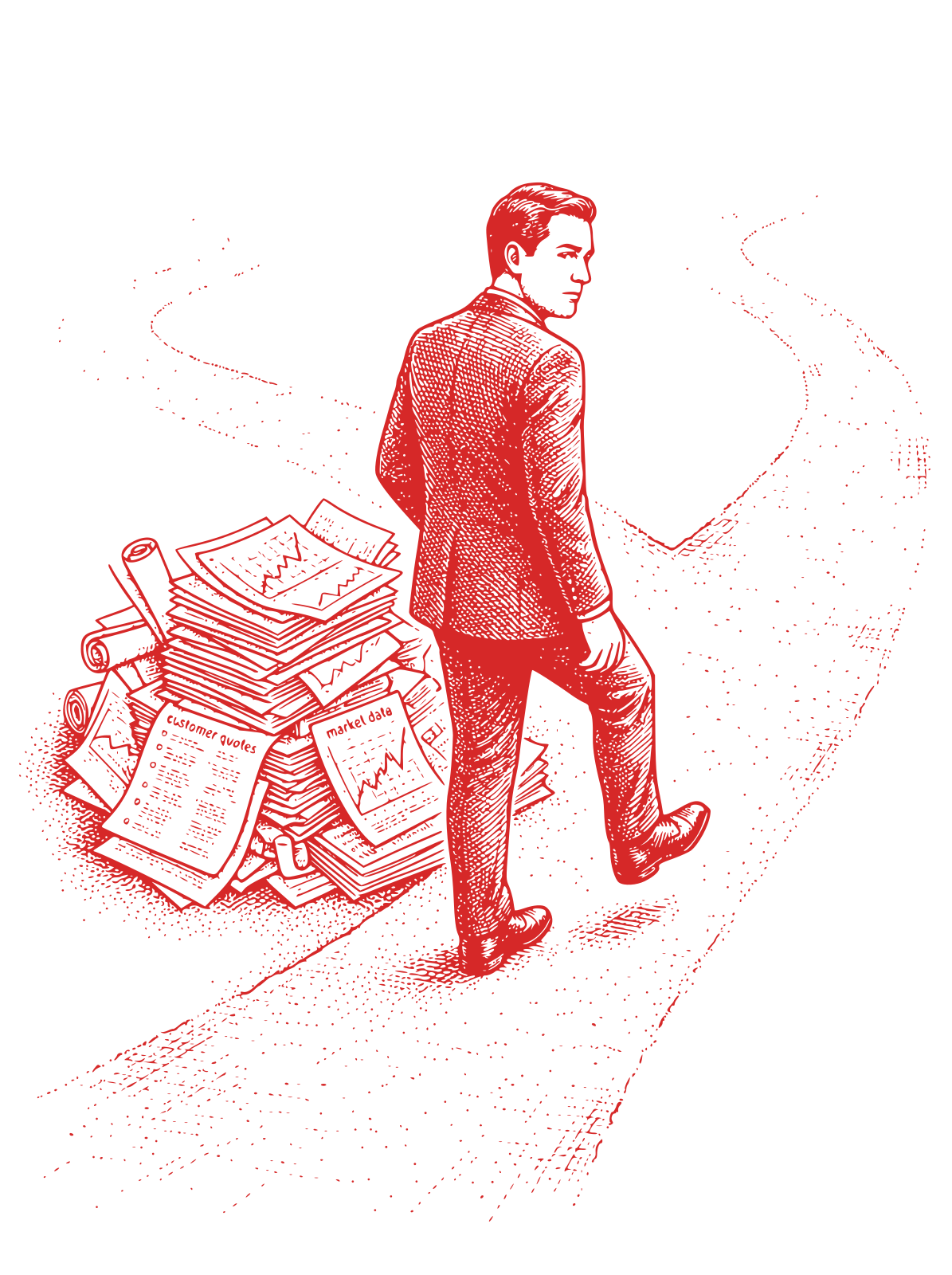
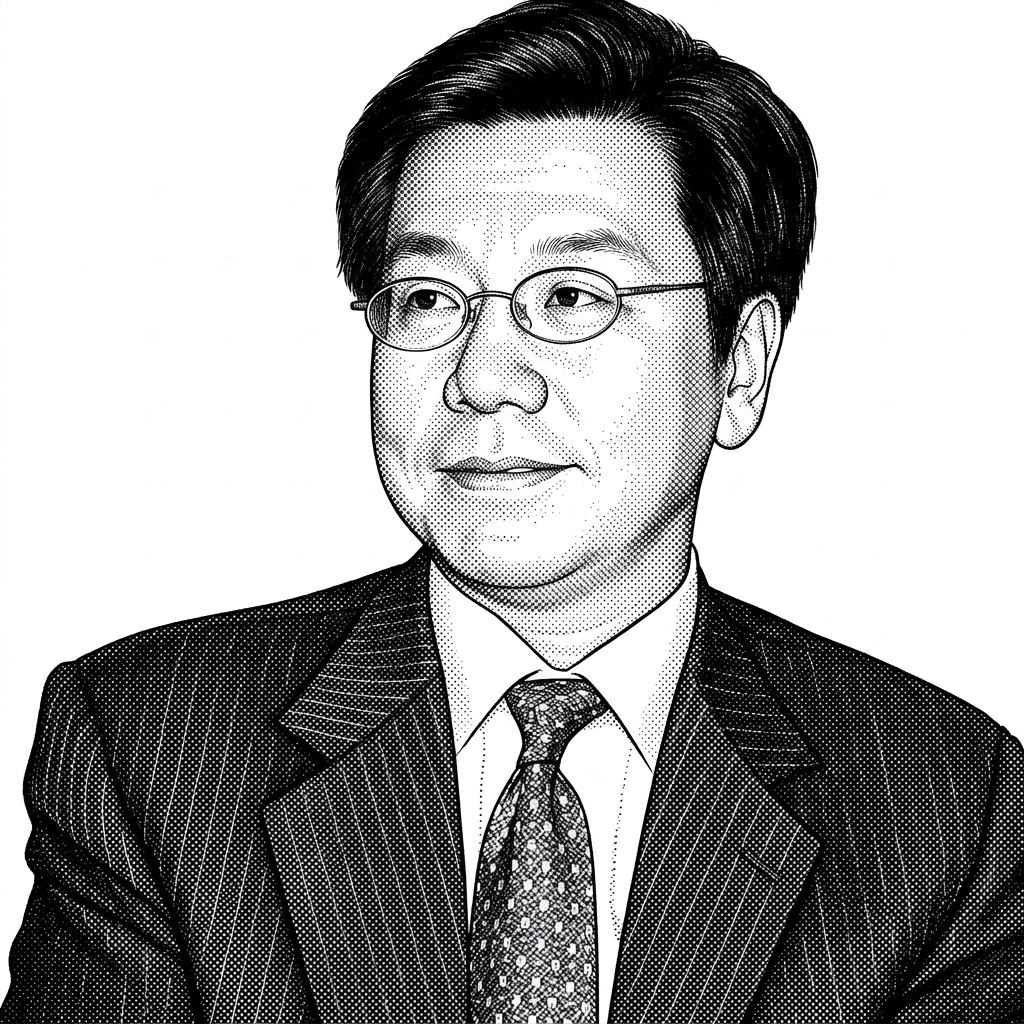
Kai-Fu Lee received his diagnosis in September 2013, at the age of fifty-one, in the middle of what appeared from the outside to be an exceptionally successful life. He had founded Microsoft Research Asia, which would become one of the most productive AI research laboratories in the world. He had led Google's China operations. He had built Sinovation Ventures into a major force in Chinese technology investment. He had written books and given talks and accumulated followers on Weibo in numbers that established him as among the most influential voices in Chinese technology culture. He had, by any conventional metric, made the most of the tools available to him.
What the diagnosis revealed, in Lee's own telling, was that the metrics were wrong. Not wrong in their measurement — the productivity was real, the influence was real, the companies were real — but wrong in their selection. He had been measuring the things AI could eventually replace: efficiency, output, information processing, task completion. He had been neglecting, systematically and deliberately, the things AI could not replace: presence, relationship, the slow and unglamorous work of actually loving the people in his life.
This is not a story about death delivering wisdom. It is a story about what happens when a person who has spent decades building systems for optimizing cognitive performance discovers that cognitive performance was never the point. The lymphoma went into remission. Lee survived. But the encounter left a mark on his intellectual project that is visible in everything he has written and said since, and it is the mark that makes his framework different from every other account of AI's trajectory produced by someone who actually built the technology.
Most AI optimists share a structural feature: they believe the technology will be generative, that new forms of work and value will emerge to replace what is displaced, that the history of technological transition validates confidence in outcomes we cannot yet fully see. Most AI pessimists share a complementary structure: they believe the displacement will be more severe, more rapid, and less self-correcting than the optimists claim. Both camps conduct their analysis at a distance from the question Lee found himself confronting in a hospital bed in Beijing: even if the optimists are right about the aggregate outcomes, what is being lost in the transition, and is it recoverable?

The question changed what Lee was capable of saying and what he was capable of building. The work that followed — AI Superpowers, AI 2041, the founding of 01.AI, the deeper philosophical writing on what humans are for in a world of artificial intelligence — bears the mark of the question across every chapter.
Lee grew up between worlds. Born in Taipei in 1961, he moved to the United States at eleven, attending Oak Ridge High School in Tennessee — a displacement that required the rapid acquisition of language, culture, and the social codes of a country that did not share his. He studied computer science at Columbia and received his doctorate from Carnegie Mellon, where he developed SPHINX, one of the earliest continuous speech recognition systems — work that demonstrated both his technical gifts and the characteristic ambition of a researcher who believed the boundary between human language and machine comprehension was a problem to be solved, not a mystery to be preserved.

Apple. Silicon Graphics. Microsoft. Google. Each move was upward and outward, accumulating power and influence. The move back to China in 1998 to found Microsoft Research Asia was both strategic and personal — a return to a culture that had been interrupted by emigration, a recognition that the AI future was not going to be written only in California. That recognition proved correct. The laboratory produced researchers who went on to found and lead major AI companies across China's technology sector. The density of talent Lee cultivated in Beijing in the early 2000s is one of the underappreciated facts of China's subsequent AI development.
What the hospital bed clarified was not that this work was wrong. It was that the work had been conducted according to a value system that treated human output as the measure of human worth, and that this value system was both pervasive and mistaken. Lee had absorbed, as thoroughly as anyone of his generation, the optimization ethic of elite technology culture: maximize your impact, scale your influence, produce more and faster and at greater reach. He had applied this ethic to himself with the same rigor he applied to the systems he built.
The question the illness forced — and that his subsequent work has been asking in increasingly direct terms — is whether a civilization organized around this ethic is prepared for the transition AI represents. If the highest human value is efficiency, and AI is more efficient, then humans are losing a competition they defined wrong. But if the highest human value is something efficiency cannot capture — something like love, or presence, or the irreplaceable particularity of one person's attention to another — then the AI transition looks entirely different. It is not a threat to be managed. It is a clarification to be received.
Lee's four waves framework, the structural backbone of AI Superpowers, traces the progressive displacement of human cognitive labor across four sectors. Internet AI displaces editorial and recommendation work. Business AI displaces analytical and decision-support work. Perception AI displaces tasks that require sight, hearing, and pattern recognition. Autonomous AI displaces tasks requiring motor control and physical navigation. The framework is now half a decade old and the waves have arrived faster than even Lee's most aggressive timeline anticipated. The 2026 reality is that the displacement is not coming. It is here. The labor reckoning Lee predicted is the labor reckoning the global economy is now in.
The labor reckoning is the point at which the strategic question — how should individuals and societies position themselves for the transition AI represents? — meets the philosophical question — what kind of person does the AI transition require us to become, and what kinds of people does it risk producing if the cultural response to it is inadequate? The strategic question has strategic answers: develop AI-resistant skills, cultivate cross-domain expertise, position yourself in occupations that require genuine interpersonal engagement. The philosophical question does not have strategic answers. It has cultural and personal answers: cultivate the capacity for genuine presence with others, resist the optimization imperative in the domains where optimization is counterproductive, build a sense of self that is not contingent on productivity or influence.
Lee's most distinctive philosophical move is the proposition that human beings are for love. Not as sentiment. As a technical category. Love, in Lee's framework, names the domain of activity that cannot be optimized because it requires genuine presence, genuine stake, genuine risk of loss. The parent who is fully present with the child is doing something the parent could not have outsourced to anyone and that the child could not have received from anyone else. The doctor who genuinely listens to a frightened patient is doing something that AI diagnostic support cannot supply, regardless of how accurate the diagnostic support becomes. The teacher who knows the particular student in the particular moment of difficulty is doing something an adaptive tutoring system cannot replicate, because the system has no stake in this particular student and the student knows it.
The technical category of love is the category of activity in which the human's irreplaceability is constitutive. The activity could not be what it is without this particular person doing it. The substitution of AI for the human would not improve the activity. It would destroy it. The activity is, in the strictest sense, a relational achievement that depends on the specific identity of the participants.
This is a Chinese philosophical move framed in language Lee acquired in the American university system. It is structurally continuous with Bing Song's gongsheng and with Yi Zeng's relational evaluation of AI's effects on the social fabric. What Lee adds — and what gives the move its specific weight in the global discourse — is the demonstration that the move can be made by someone with the technical credentials and the commercial track record to be heard in rooms where the move would otherwise be dismissed as soft, sentimental, insufficiently rigorous.
Lee is not soft. Lee has run companies. Lee has done deals. Lee has, by the metrics that the relevant rooms reward, demonstrated that he understands the strategic and commercial dimensions of AI as well as anyone alive. When he says that human beings are for love, the room cannot easily dismiss the claim as ignorance of how the technology works or how the markets reward it. He knows. He is making the claim anyway. He is making the claim because the hospital bed showed him something the strategy memos and the deal documents cannot show.
What followed in his work is a sustained attempt to keep both registers operative at once. The labor reckoning is real and the social investment fund is necessary and the four waves require institutional response and the 01.AI company is competing at the frontier and the AI 2041 stories are about how the technology actually transforms ordinary life. All of this is in Lee's work. None of it is abandoned. None of it is softened. But all of it is now conducted with the prior question — what is being lost, what cannot be replaced, what irreplaceable thing the human contributes when the human is fully present — visible at every level.
The convergence with the [YOU] on AI position is striking. The book's argument that human value comes not from being able to build a thing but from deciding what things are worth building, that the question of what to build, and for whom is the residual question no tool can answer, is Lee's question in different vocabulary. The hospital bed in Beijing and the Trivandrum room in southern India produced the same recognition: the implementation work that occupied most of a working life was masking the thing that actually mattered, and the AI's removal of the implementation work reveals the masked thing as the load-bearing one.
Lee is the most American-trained of the five Chinese thinkers in this book. His arrival at the conclusion that human beings are for love — as a technical category, in the precise sense that love resists optimization because optimization presupposes substitutability and love presupposes the irreplaceable particularity of the participants — is the most personal convergence in the book. He started in the place where Altman starts. He arrived, by way of an illness no business school case study could anticipate, at the place where Bing Song lives.
The near-death curriculum is the curriculum Lee took. It is the curriculum AI is now offering, at greater or lesser intensity, to the entire global cohort of knowledge workers whose previous functions are being substituted by the technology they helped to build. The curriculum cannot be passed on the strength of academic credentials. It can only be taken by being in the situation that forces it. The situation is, for most of the cohort, now arriving. Whether the cohort takes the curriculum or runs from it — whether the situation produces the wisdom the situation is capable of producing, or whether the situation produces only the despair of disrupted identity without the recovery — is the question on which a significant fraction of the next decade's social and political stability is going to depend.
Lee's contribution is to have taken the curriculum, to have come out the other side with the recognition intact, and to have made the recognition available in a register that the rooms making the AI decisions can still hear. The recognition is not a strategy. It is the orientation from which strategy becomes possible without becoming the substitute for the prior question of what the strategy is for.
Human beings are for love. That is the answer Lee came back from the hospital with. The answer is also, in different vocabulary, the answer the Confucian River has been giving for two and a half thousand years. The river found, in Kai-Fu Lee, a vessel capable of carrying the answer into the rooms where the technology was being built. The book that contains this chapter is one attempt to carry the answer further.